



















The American technology landscape is witnessing an unprecedented reshuffling of power, with new champions rising to claim dominant positions across multiple market segments. This sector leader emergence isn’t just about stock prices climbing—it represents fundamental shifts in how technology companies are positioning themselves for long-term market control.
Recent market analysis reveals that traditional boundaries between tech sectors are dissolving, creating opportunities for companies with diversified technological capabilities to establish commanding positions. The most successful organizations are those that have managed to integrate artificial intelligence, cloud computing, and advanced data analytics into cohesive platforms that serve multiple market needs simultaneously.
Microsoft continues to demonstrate remarkable sector leader emergence through its strategic positioning in enterprise software, cloud infrastructure, and AI development. The company’s ability to leverage its existing customer relationships while expanding into high-growth areas has created a compound effect that solidifies its market position. Their integration of AI capabilities across Office 365, Azure, and GitHub has established new industry standards that competitors struggle to match.
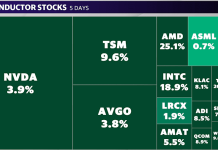
Meanwhile, NVIDIA’s transformation from a graphics card manufacturer to an AI infrastructure powerhouse represents perhaps the most dramatic example of sector leader emergence in recent years. The company’s dominance in AI chip design has created a moat so wide that even well-funded competitors find it difficult to challenge their market position. Their data center revenue streams now dwarf traditional gaming revenues, illustrating how strategic pivots can redefine entire company trajectories.
Amazon’s continued evolution beyond e-commerce showcases another dimension of sector leader emergence. AWS maintains its position as the world’s largest cloud provider, but the company’s expansion into advertising technology, logistics automation, and healthcare technology demonstrates how market leaders can leverage their core strengths to capture adjacent opportunities. This diversification strategy has proven particularly effective in maintaining growth rates despite the maturation of their original business segments.
The emergence of new sector leaders isn’t limited to established giants. Companies like Palantir and Snowflake have carved out specialized niches in data analytics and cloud data platforms, respectively, by focusing on specific market needs that larger competitors couldn’t address as effectively. These focused approaches to sector leader emergence often prove more sustainable than attempts to compete directly with established players across broad market segments.
Apple’s services revolution illustrates how hardware companies can achieve sector leader emergence in entirely new categories. The App Store ecosystem, iCloud services, and Apple Pay have created recurring revenue streams that complement their device sales while establishing the company as a financial services and digital marketplace leader. This transformation has fundamentally altered how investors value the company and increased its resilience to hardware sales fluctuations.
Investment patterns reveal that institutional investors are increasingly prioritizing companies that demonstrate clear paths to sector leader emergence rather than those with impressive revenue growth alone. The focus has shifted toward businesses with defensible market positions, recurring revenue models, and the technological capabilities needed to maintain competitive advantages over extended periods.
The current market environment favors companies that can demonstrate operational leverage alongside technological innovation. Sector leader emergence now requires not just breakthrough products or services, but also the operational excellence needed to scale those innovations profitably. Companies that master both dimensions often find themselves with market positions that become increasingly difficult for competitors to challenge.
As artificial intelligence continues reshaping every aspect of the technology sector, the next wave of sector leader emergence will likely favor companies that can successfully integrate AI capabilities into their existing business models while maintaining the agility needed to adapt to rapidly changing market conditions. The American tech stocks that recognize this reality and position themselves accordingly are most likely to define the next decade of technological leadership.