Tesla Slides as Treasury Yields Swamp Austin Robotaxi News
Tesla shares fell on rising Treasury yields even as reports suggested its Austin robotaxi fleet may be running without onboard safety monitors. A look at how much of the drop was macro.
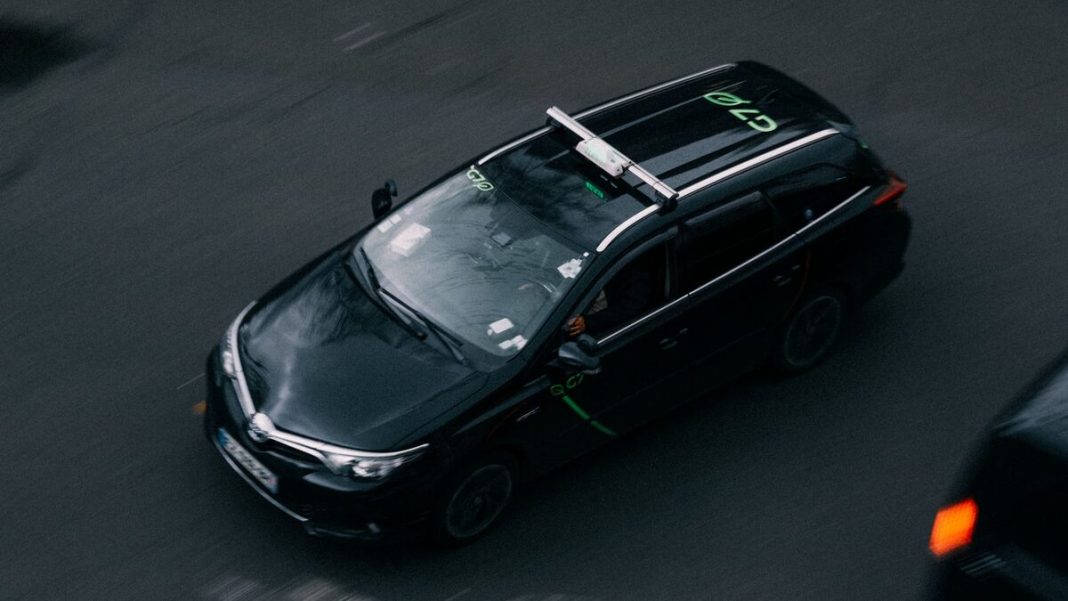
Tesla (TSLA) fell 3.1% on August 20, 2026 as rising Treasury yields overshadowed indications that its Austin robotaxi service may be running without onboard safety drivers; the stock last traded at 342.24, down 2.53% from a prior close of 351.12, at 17:35 GMT.
Tesla (TSLA) spent Thursday, August 20, 2026 trading in the red, and the reason had less to do with the company than with the bond market. Shares tumbled 3.1% during the session, according to GuruFocus, as rising Treasury yields overwhelmed fresh indications that the company's Austin robotaxi service may now be operating without onboard safety drivers — arguably the single most important operational milestone in Tesla's autonomy programme.
By the last trade recorded at 17:35 GMT, the stock had clawed back part of that decline, quoted at 342.24 against a prior close of 351.12, a fall of 2.53% on the day. The intraday range ran from 338.96 to 348.42, meaning the stock never traded above its previous close at any point in the session.
Separating the rate move from the company story
The useful question on a day like this is how much of the drop belongs to Tesla and how much belongs to the market. The benchmarks give a partial answer. The S&P 500 tracker (SPY) was down 0.57% at $764.65, the Nasdaq 100 tracker (QQQ) fell 0.76% to $710.61, and the Dow 30 tracker (DIA) dropped 0.98% to $529.02. All three sat at or very near their session lows at the time of the last trade, which is the signature of a broad, macro-driven sell-off rather than rotation between sectors.
Against the Nasdaq 100, Tesla's decline was roughly 1.8 percentage points wider — an illustrative gap derived from the two quoted moves. That is the crudest possible attribution, but it points in a clear direction: a little over a quarter of Tesla's fall tracked the broad tech tape, and the balance was Tesla's own beta to interest rates doing what it always does.
Why should a rise in Treasury yields hit Tesla harder than the index? Because Tesla is priced as a long-duration asset. A meaningful share of its market value rests on cash flows that do not exist yet — robotaxi revenue, energy storage scale, autonomy software licensing. When the discount rate applied to distant cash flows rises, the present value of those cash flows falls faster than it does for a company earning most of its money today. Higher yields also raise the cost of auto financing, which sits directly between Tesla's showroom and the household budget. The stock behaves like a duration instrument, and Thursday was a duration day.
What removing the safety driver would actually change
The operational news cuts the other way. Reports that Tesla's Austin robotaxi service may be running without an onboard safety monitor mark a threshold the company has been circling for a long time. There is a categorical difference between a vehicle that drives itself while a trained employee sits in the seat ready to intervene, and one that carries a paying passenger with nobody in the vehicle responsible for the driving task.
The economics change at that line. With a safety driver, a robotaxi is a taxi with an unusually expensive dispatch system — the labour cost that autonomy is supposed to eliminate is still on the payroll. Remove the person, and the unit economics start to resemble the model Tesla has described for years: capital cost, energy, insurance, cleaning and depreciation, with no wage per hour of service. That is the point at which a robotaxi fleet becomes a scalable business rather than a technology demonstration.
The liability picture changes too. Without a human monitor in the loop, responsibility for a collision sits squarely with the operator and the system, not with a driver who failed to take over. Insurers, regulators and plaintiffs' lawyers all read that distinction the same way, and it is one reason the transition tends to be made quietly and in a single metro area first.
Why good operational news did not move the price
Markets do not price milestones evenly. A driverless deployment in one city, unconfirmed by the company at the time of the move, is exactly the kind of development that a market focused on the front end of the yield curve will file away for later. Rate moves hit every position in a portfolio at once and force real selling; a service-design change in Austin affects a valuation input that most investors will not remark until it appears in reported revenue or in a formal company disclosure.
There is also a credibility discount at work. Tesla's autonomy timeline has been revised repeatedly over the past decade, and the market has learned to wait for scale rather than pay for a first step. A single city with a limited fleet does not, on its own, validate a valuation built on nationwide autonomous ride-hailing. The stock's reaction — or lack of one — is less a judgement on the technology than on how far it still has to travel.
What to watch from here
Three things will determine whether Thursday's slide reads as noise or as the start of something. The first is the direction of Treasury yields. If the move higher persists, high-multiple growth names will keep bearing the brunt, and Tesla's sensitivity means it will keep showing up near the bottom of index screens on down days regardless of company news.
Tesla's autonomy timeline has been revised repeatedly over the past decade, and the market has learned to wait for scale rather than pay for a first step.
The second is confirmation and geography. A driverless service that stays confined to Austin is a pilot. One that replicates in a second and third metro area, under different regulators and different weather, is a business. The speed of that replication is the variable that matters for the valuation, not the fact of the first deployment.
The third is incident record. Nothing would reset the autonomy narrative faster than a serious crash involving a vehicle with no human aboard. The absence of incidents is not newsworthy day to day, but it compounds into regulatory permission, and regulatory permission is what allows the fleet to grow.
For now, the tape says what it usually says on a rate-driven day: the macro won. The stock traded its entire session below the previous close, closing the gap only partially into the final hours, while the broad indices did the same in smaller size. Investors who bought Tesla for the robotaxi thesis got confirming news and a lower price on the same day — which is either an opportunity or a reminder that the discount rate has a vote too.
Frequently asked questions
How much did Tesla stock fall on August 20, 2026?
Tesla shares tumbled 3.1% during the session, according to GuruFocus. By the last recorded trade at 17:35 GMT, the stock stood at 342.24, down 2.53% from a prior close of 351.12. The intraday range ran from 338.96 to 348.42, meaning the shares did not trade above the previous close at any point during the day.
Why did Tesla fall despite positive robotaxi news?
Rising Treasury yields drove the move. Higher yields reduce the present value of distant cash flows, and Tesla's valuation rests heavily on future businesses such as autonomous ride-hailing rather than current earnings. Rate moves force portfolio-wide repricing immediately, while an unconfirmed operational milestone in a single city affects a valuation input investors typically wait to see in reported results.
What is significant about removing safety drivers from robotaxis?
A safety monitor in the vehicle keeps the labour cost that autonomy is meant to eliminate. Removing that person shifts the cost base to capital, energy, insurance, cleaning and depreciation, which is when robotaxi unit economics start to work at scale. It also moves collision liability squarely to the operator and the system rather than a human who failed to intervene.
How did Tesla's drop compare with the broader market?
The Nasdaq 100 tracker fell 0.76% to $710.61, the S&P 500 tracker dropped 0.57% to $764.65 and the Dow tracker lost 0.98% to $529.02. Tesla's 2.53% decline at the last trade was roughly 1.8 percentage points wider than the Nasdaq 100's, suggesting most of the fall reflected Tesla's own rate sensitivity rather than the general tape.
Why is Tesla especially sensitive to interest rates?
Tesla trades as a long-duration asset: much of its market value depends on cash flows expected years out, including robotaxi revenue and autonomy software. When discount rates rise, those distant cash flows lose value faster than near-term earnings. Higher rates also lift auto financing costs, which directly affects the affordability of vehicles for retail buyers.
What should investors watch next on the robotaxi rollout?
Three things: whether Treasury yields keep rising, which would continue to pressure high-multiple growth names; whether the driverless service replicates beyond Austin into other metro areas with different regulators and weather; and the safety incident record, since accumulating clean operating time is what builds the regulatory permission needed to expand the fleet.
Sources
Photo: Mathias Reding · Pexels Licence — source