















The tremors are unmistakable. From the Nasdaq’s semiconductor swings to the Russell 2000’s manufacturing rallies, US financial markets are dancing to an increasingly complex rhythm dictated by trade policy decisions. What once seemed like distant Washington deliberations now translate into immediate portfolio consequences, as investors grapple with a new reality where geopolitical strategy and market performance are inextricably linked.
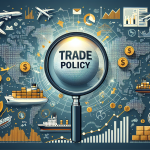
The trade policy impact on financial markets has evolved far beyond simple tariff announcements. Today’s interconnected global economy means that a single policy shift can ripple through supply chains, currency valuations, and sector rotations within hours. Recent data from the Federal Reserve shows that trade policy uncertainty has become one of the top three factors influencing quarterly earnings guidance revisions among S&P 500 companies.
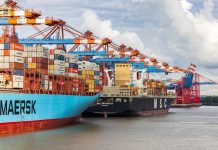
Consider the technology sector’s dramatic transformation. Companies that once operated under predictable international frameworks now face a patchwork of restrictions, sanctions, and preferential agreements that can shift overnight. Apple’s supply chain diversification, worth billions in infrastructure investments, exemplifies how trade policy impact forces fundamental business model adaptations that investors must price into their valuations.
The financial sector faces equally profound changes. Regional banks with significant exposure to agricultural lending find their loan portfolios directly affected by agricultural trade agreements. Meanwhile, large investment banks must navigate the complex terrain of cross-border regulations that can make or break major deals. JPMorgan’s recent quarterly report highlighted how trade policy uncertainty added an estimated 15 basis points to their risk premiums on international transactions.
Currency Markets Feel the Heat
Perhaps nowhere is the trade policy impact more immediately visible than in currency markets. The dollar’s strength or weakness often hinges on perceived US trade competitiveness and the likelihood of retaliatory measures from trading partners. Currency traders now monitor trade representative statements as closely as Federal Reserve communications, understanding that a single policy announcement can trigger significant moves in major currency pairs.
The emergence of trade bloc dynamics has created new currency correlations that didn’t exist a decade ago. When the US strengthens ties with Pacific partners, currencies from those regions often rally in tandem. Conversely, tensions with major trading partners can lead to coordinated currency interventions that ripple through emerging markets.
Energy markets showcase another dimension of this transformation. Oil and gas companies must navigate an increasingly complex web of sanctions, pipeline approvals, and renewable energy incentives that stem directly from trade policy decisions. ExxonMobil’s recent strategic pivot toward domestic operations reflects how even energy giants must adapt to a world where trade policy impact determines market access and profitability.
For individual investors, this new landscape demands a more sophisticated approach to portfolio construction. Traditional sector diversification may prove insufficient when trade policies can simultaneously affect multiple industries. Smart money is increasingly flowing toward companies with proven supply chain flexibility and those positioned to benefit from reshoring trends.
The New Investment Calculus
Institutional investors are developing entirely new frameworks for assessing trade policy impact. Private equity firms now employ dedicated teams to analyze geopolitical risks before making investment decisions. Pension funds are adjusting their long-term allocation models to account for the possibility of sustained trade disruptions that could affect decades-long investment horizons.
The bond market tells its own story of adaptation. Corporate credit spreads now factor in trade policy stability as a key variable. Companies with heavy international exposure face higher borrowing costs, while those with primarily domestic operations enjoy improved access to capital. Municipal bonds in manufacturing-heavy states have seen their ratings influenced by local exposure to trade policy changes.
As markets continue evolving under this new paradigm, one thing becomes clear: understanding trade policy impact is no longer optional for serious investors. The days when market participants could focus solely on earnings reports and economic indicators have given way to a reality where Washington decisions drive Wall Street reactions. Success in this environment requires not just financial acumen, but a deep appreciation for how policy and markets intertwine in an increasingly complex global economy.