


















While headline market indices grab attention with their daily moves, savvy investors know that beneath the surface lies a treasure trove of intelligence that reveals the true health of market trends. A market breadth indicator serves as your financial reconnaissance tool, offering street-level intelligence about how many stocks are actually participating in market movements versus riding the coattails of a few heavyweight performers.
Think of market breadth as the difference between a parade with thousands of enthusiastic participants and one with just a few floats carrying the entire show. When markets rally but only a handful of mega-cap stocks drive the gains, that’s a very different story than when hundreds or thousands of stocks participate in the advance. This distinction can mean the difference between sustainable trends and fragile rallies ready to crumble.
Understanding Market Participation Through Breadth Analysis
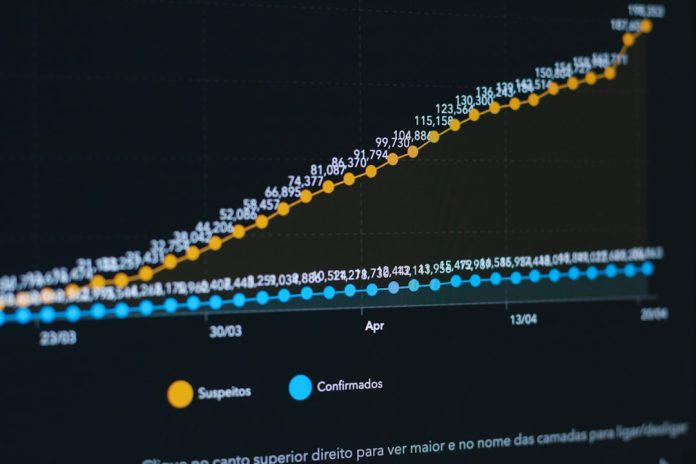
A market breadth indicator measures the extent of participation across the broader market by analyzing how many individual stocks are advancing versus declining. The most fundamental breadth metric is the advance-decline line, which tracks the cumulative difference between rising and falling stocks over time. When this line trends upward alongside market indices, it signals broad-based participation and healthier market conditions.
Beyond simple advance-decline ratios, sophisticated breadth indicators include the percentage of stocks trading above their moving averages, new highs versus new lows, and sector participation rates. These metrics paint a comprehensive picture of market internals that pure price-based indicators often miss. For instance, during periods when major indices reach new highs but fewer than 50% of stocks trade above their 200-day moving averages, experienced investors recognize this as a potential warning signal.
Key Breadth Indicators Every Investor Should Monitor
The McClellan Oscillator stands out as one of the most respected market breadth indicators, using exponential moving averages of advance-decline data to generate overbought and oversold signals. When this oscillator diverges from price action – showing weakness while indices climb or strength during market declines – it often precedes significant trend changes.
Another powerful tool is the percentage of stocks above their 50-day and 200-day moving averages. Healthy bull markets typically see 70% or more stocks trading above these key technical levels. When participation drops below 30%, it often signals distribution and potential market weakness ahead. The Arms Index (TRIN) provides real-time breadth intelligence by comparing advancing versus declining volume, helping investors gauge whether money flow supports current price movements.
Spotting Market Divergences Before They Impact Your Portfolio
Market breadth indicators excel at identifying divergences that precede major trend changes. Classic bearish divergence occurs when indices make new highs while breadth indicators fail to confirm, suggesting that fewer stocks are participating in the rally. Conversely, bullish divergence emerges when breadth indicators show strength even as indices decline, indicating underlying resilience that often leads to market recovery.
Professional traders pay close attention to breadth thrust signals, which occur when a market breadth indicator moves from oversold to overbought conditions rapidly. These powerful momentum shifts often coincide with the beginning of significant bull market advances. The key is recognizing when breadth expansion confirms price action versus when it diverges, providing early warning signals for portfolio adjustments.
Implementing Breadth Intelligence in Your Investment Strategy
Successful implementation of market breadth indicators requires understanding their context within broader market cycles. During early-stage bull markets, breadth typically leads price action as money flows into a wide array of stocks before focusing on leaders. In mature bull markets, breadth often deteriorates first as investor focus narrows to a smaller group of perceived winners.
Smart investors use breadth analysis to fine-tune their market exposure and sector allocation decisions. When breadth indicators show broad participation, it supports maintaining full equity exposure across diverse sectors. Conversely, when breadth deteriorates while indices remain elevated, it signals time to become more selective, focusing on quality holdings while reducing overall risk exposure.
The most successful investors treat market breadth indicators not as standalone signals but as crucial intelligence that enhances their overall market assessment. By combining breadth analysis with fundamental research and technical analysis, you gain a three-dimensional view of market conditions that pure price-watching simply cannot provide. This street-level intelligence helps separate genuine market strength from artificial rallies, giving you the confidence to make informed decisions when it matters most.