


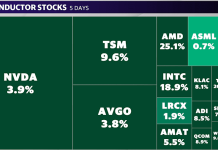

















The whispers on Wall Street trading floors have grown into urgent warnings as professional investors grapple with what many consider the most concerning market breadth indicator readings in over a decade. From Goldman Sachs to Morgan Stanley, institutional strategists are raising red flags about a market that appears increasingly dependent on a shrinking number of mega-cap stocks to sustain its upward trajectory.
Market breadth indicator analysis reveals that fewer than 30% of S&P 500 stocks are currently trading above their 50-day moving averages, even as the index itself hovers near all-time highs. This stark divergence has prompted veteran analysts to question the sustainability of current market levels and has fundamentally altered how Wall Street approaches portfolio construction and risk management.
JPMorgan Chase’s equity research team recently published a comprehensive analysis highlighting how the advance-decline line, one of the most reliable market breadth indicators, has been diverging from major indices for consecutive months. This technical divergence suggests that while headline numbers may appear robust, the underlying foundation of the market rally remains precarious. Senior strategists at the firm have begun recommending defensive positioning strategies to institutional clients, marking a notable shift from their previously optimistic stance.
The concern extends beyond traditional Wall Street investment banks. Hedge fund managers, who collectively oversee trillions in assets, are increasingly incorporating market breadth indicator data into their algorithmic trading models. Renaissance Technologies and Citadel, two of the industry’s most sophisticated quantitative funds, have reportedly adjusted their risk parameters based on deteriorating breadth metrics, leading to reduced leverage across multiple strategies.
Pension fund managers and endowment officials are taking note as well. The California Public Employees’ Retirement System, the nation’s largest pension fund, recently modified its equity allocation strategy after internal analysis revealed how narrow market breadth indicator trends have historically preceded significant market corrections. Their research department found that when fewer than 40% of stocks participate in market advances, subsequent six-month returns tend to be substantially lower than historical averages.
Perhaps most telling is how this market breadth indicator deterioration is affecting individual stock selection strategies. Prominent stock pickers like Cathie Wood of ARK Invest and Dan Loeb of Third Point Capital have publicly acknowledged the challenging environment for active management when market gains are concentrated among so few names. The traditional approach of finding undervalued companies with strong fundamentals has become increasingly difficult when broader market participation remains anemic.
The options market tells a similar story, with implied volatility measures showing increased demand for downside protection even as equity indices continue their ascent. Professional options traders report unusual activity in protective puts on broad market ETFs, suggesting that sophisticated investors are using derivatives to hedge against the risks highlighted by deteriorating market breadth indicator readings.
Exchange-traded fund flows provide additional evidence of Wall Street’s shifting sentiment. While passive index funds continue to attract inflows, there has been a notable surge in demand for equal-weighted ETFs and sector rotation strategies designed to benefit from eventual breadth improvement. State Street Global Advisors and BlackRock have both launched new products specifically targeting investors concerned about concentration risk in traditional market-cap weighted indices.
International perspectives add another layer to Wall Street’s market breadth indicator concerns. European investment banks, including Credit Suisse and Deutsche Bank, have issued research notes warning their clients about the potential for contagion if U.S. market concentration issues lead to broader corrections. Their analysis suggests that narrow market breadth in the world’s largest equity market could have significant implications for global portfolio allocations.
The Federal Reserve’s recent commentary has not gone unnoticed by Wall Street professionals either. While central bank officials haven’t explicitly referenced market breadth indicators in their public statements, internal research papers suggest growing awareness of how monetary policy may be contributing to increased market concentration. This has led some institutional investors to position for potential policy shifts that could favor broader market participation.
As Wall Street continues to grapple with these challenging market breadth indicator signals, the consensus appears to be shifting toward more defensive and diversified strategies. The days of riding a handful of mega-cap technology stocks to outperformance may be numbered, and professional investors are increasingly preparing for a market environment where stock selection and risk management become paramount. Whether this cautious approach proves prescient or overly conservative will likely depend on how quickly and dramatically the current market breadth indicator trends begin to reverse.