













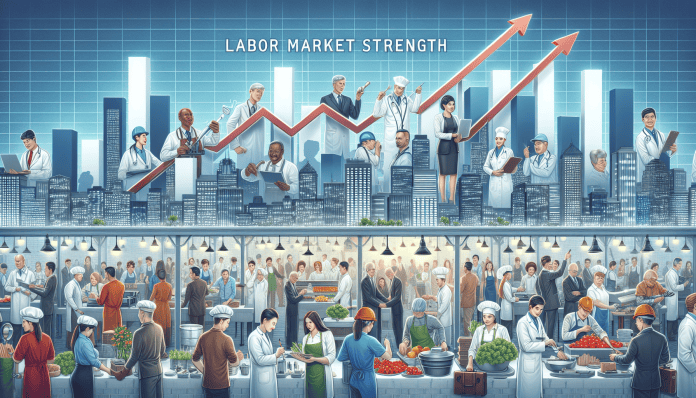
America’s economy is experiencing a remarkable phenomenon that’s catching economists and policymakers off guard. While traditional indicators pointed toward potential slowdowns, the nation’s labor market strength continues to defy predictions, creating ripple effects that extend far beyond employment statistics. This unexpected resilience is fundamentally altering how analysts view economic stability and growth potential.
The implications reach every corner of American society, from household spending power to Federal Reserve policy decisions. Understanding these dynamics isn’t just academic—it’s essential for anyone navigating today’s economic landscape, whether you’re a business owner, investor, or working professional.
Record-Breaking Employment Metrics Signal Unprecedented Growth
Current employment data reveals extraordinary momentum across multiple sectors. The unemployment rate has maintained levels not seen since the late 1960s, while job creation continues at a pace that surprises even optimistic forecasters. This labor market strength manifests through several key indicators:
- Monthly job additions consistently exceeding projections
- Labor force participation reaching multi-decade highs
- Voluntary quit rates indicating worker confidence
- Cross-sector hiring acceleration in both traditional and emerging industries
Manufacturing, healthcare, professional services, and technology sectors are driving this expansion. Manufacturing alone has added positions at rates unseen since the post-war boom, while service industries continue their steady growth trajectory. The breadth of this expansion suggests structural improvements rather than temporary fluctuations.
Wage Growth Momentum Transforms Consumer Spending Power
Beyond job creation, wage growth represents perhaps the most significant aspect of current labor market strength. Average hourly earnings have risen substantially, with particularly notable gains among mid-level and entry-level positions. This trend breaks from historical patterns where wage growth typically lagged employment recovery.
The acceleration stems from genuine labor shortages in key sectors, forcing employers to compete aggressively for talent. Construction, hospitality, logistics, and healthcare lead wage increases, with many regions reporting double-digit percentage gains year-over-year. These increases translate directly into enhanced consumer spending capacity, creating positive feedback loops throughout the economy.
Small businesses, traditionally slower to raise wages, now offer competitive packages including enhanced benefits, flexible work arrangements, and accelerated advancement opportunities. This shift represents a fundamental rebalancing of employer-employee dynamics.
Regional Economic Disparities Reveal Complex Growth Patterns
While national labor market strength appears robust, regional variations tell more nuanced stories. Sunbelt states continue experiencing rapid job growth, driven by corporate relocations, population migration, and business-friendly policies. Texas, Florida, North Carolina, and Arizona lead in absolute job creation numbers.
However, traditional industrial regions are also participating in this expansion. Midwest manufacturing centers benefit from reshoring trends and infrastructure investments. Rust Belt cities report manufacturing job growth for the first time in decades, though at more modest rates than Sunbelt counterparts.
Rural areas present mixed results. Agricultural regions with diverse economic bases show improvement, while areas heavily dependent on single industries face continued challenges. This disparity highlights the importance of economic diversification in capturing broader labor market gains.
Federal Reserve Policy Implications Shape Financial Markets
Persistent labor market strength creates complex challenges for monetary policy. The Federal Reserve traditionally views tight labor markets as inflation risks, yet current conditions haven’t triggered the price spirals that theory predicts. This disconnect forces policymakers to reconsider fundamental assumptions about employment and inflation relationships.
Financial markets closely watch employment data for policy signals. Strong labor numbers typically suggest potential interest rate adjustments, affecting everything from mortgage rates to corporate borrowing costs. However, the current environment’s unique characteristics make predictions more difficult than usual.
Bond markets reflect this uncertainty, with yield curves showing unusual patterns. Equity markets generally respond positively to employment strength, though sector rotations occur based on policy expectations and inflation concerns.
Industry-Specific Trends Drive Sectoral Transformation
Different industries experience varying aspects of labor market strength. Technology sectors face skills shortages despite aggressive recruiting, while healthcare struggles with both quantity and quality staffing needs. Professional services expand rapidly, driven by business formation and regulatory complexity.
Retail and hospitality sectors show remarkable recovery from previous disruptions, with employment levels exceeding pre-pandemic highs in many regions. E-commerce fulfillment, logistics, and transportation maintain strong demand for workers across skill levels.
Energy sectors present interesting dynamics. Traditional oil and gas industries add positions while renewable energy sectors experience explosive growth. This transition creates opportunities for workers willing to acquire new skills while maintaining demand for traditional expertise.
Future Economic Outlook Based on Current Labor Trends
Current labor market strength suggests several potential scenarios for America’s economic future. Continued employment growth could sustain consumer spending, supporting GDP expansion and business investment. However, demographic trends, automation pressures, and global economic conditions introduce uncertainties.
Skills mismatches remain concerning despite overall job availability. Education and training systems must adapt to evolving employer needs, particularly in technical and digital competencies. Public-private partnerships increasingly focus on workforce development initiatives.
Immigration policy decisions will significantly impact future labor supply, particularly in agriculture, healthcare, and service industries experiencing acute shortages. Policy choices made today will influence labor market dynamics for years ahead.
The remarkable resilience of America’s labor market strength represents both opportunity and responsibility. For businesses, this environment offers expansion possibilities but requires strategic workforce planning. For workers, unprecedented opportunities exist alongside the imperative for continuous skill development. For policymakers, balancing growth sustainability with inflation management remains crucial. Stay informed about these trends—your economic future depends on understanding and adapting to this rapidly evolving landscape.