










As inflation reaches its highest level in three years and the war in Iran crosses the three-month mark, Federal Reserve officials are carefully attuned to whether inflation becomes sticky enough that they would have to go from holding interest rates steady to hiking.
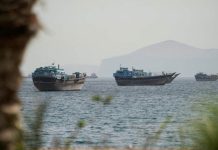
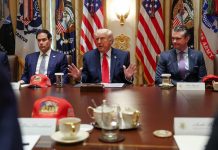
Of course, everything depends on when the conflict in the Middle East could end. US and Iranian officials reportedly reached an agreement to extend the ongoing ceasefire by 60 days and open shipping through the Strait of Hormuz. President Trump posted on Friday that he was poring over details of the potential deal in the Situation Room at the White House.
Deutsche Bank postured in a research note this week that if there’s a peace deal, near-term inflation risks would subside. But the potential for a rate hike further out remains if oil prices stay higher than before the war.
Matt Luzzetti, chief economist for Deutsche Bank, said Fed officials will likely be inclined to “look through” near-term core inflation pressures tied to the recent run-up in oil prices, treating elevated energy prices as a temporary shock.
But the narrative that elevated inflation is unlikely to be persistent will take time to be disproven, he said.
“Rate hike risks will remain in this scenario, as we see reasons that [the neutral rate] is higher than the Fed anticipates, inflation could prove to be stickier, and the labor market is likely to be resilient,” Luzzetti said.
If the peace deal fails and the Strait of Hormuz remains closed for a longer period, but there is no reintensification of the war — a muddle-through scenario — Luzzetti said multiple rate hikes become a real possibility.
This week, more Fed officials struck a hawkish tone.
Fed governor Lisa Cook said in a speech that she’s closely watching the risk that companies could embed higher energy prices into the prices they set while workers incorporate them into the wages they negotiate. She said she’s “prepared to raise rates” if inflation doesn’t fall in a “timely manner,” but her baseline is that inflation will fall back without the Fed having to raise rates.
Minneapolis Fed president Neel Kashkari also sounded cautious about inflationary forces, saying Wednesday that the Fed needs to contain inflationary risks that look to be rising, though it’s too soon to say whether that would require a rate hike.
The Fed’s preferred measure of inflation — the Personal Consumption Expenditures index (PCE) — showed this week that inflation rose to the highest level in three years. PCE inflation reached 3.8% in April, up from 3.5% in March. Excluding volatile food and energy prices on a so-called “core” basis, PCE rose 3.3%, up a tenth from 3.2% in March.
Still, rate hikes are far from a certainty.
Fed Vice Chair Philip Jefferson said he believes inflation will decline later this year as the effects of tariffs and the energy shock wane. He’s watching whether higher energy prices will start to weigh on consumer spending.
New York Fed president John Williams said Thursday that he thinks headline inflation will peak in the next couple of months and sees holding rates steady.
“Policy is in a good place” to respond to the conflict with Iran, Williams said.
And Fed governor Michelle Bowman said Friday that if the conflict persists well into the second half of the year, there could be broader inflation that would cause her to be more concerned.
“The longer the conflict persists, the more we should consider the effects on inflation in our outlook,” Bowman said. “In particular, the more persistent higher oil prices are — or if we start to see broader effects of higher energy prices on PCE inflation — the more likely I will consider shifting my approach to thinking about the balance of risks.”
The bond market thinks the Fed may not be restrictive enough. The yield on the 2-year Treasury — a good forward-looking indicator of the Fed’s policy — has risen to 4% and stayed there the past couple of weeks, implying that the Fed should hike rates by 25 basis points.