


















The intricate dance between international trade policies and financial markets has reached a crescendo, with trade policy impact now serving as one of the most powerful forces reshaping investment landscapes across the United States. As global economic relationships evolve and new trade agreements emerge, financial markets are experiencing volatility patterns, sector rotations, and capital flows that would have been unimaginable just a decade ago.
Recent market movements illuminate just how sensitive financial instruments have become to trade policy announcements. When the latest round of bilateral trade negotiations concluded last month, the S&P 500 experienced its largest single-day swing in over six months, with technology stocks surging 3.2% while traditional manufacturing equities declined by nearly 2%. This immediate market response underscores the profound trade policy impact on investor sentiment and allocation strategies.
Currency markets have proven particularly responsive to trade policy developments. The dollar index has exhibited heightened correlation with trade announcement timing, often moving 1-2% within hours of major policy revelations. This volatility stems from investors’ attempts to anticipate how new trade frameworks will affect cross-border capital flows, export competitiveness, and international monetary policy coordination. Foreign exchange traders now monitor trade policy developments as closely as Federal Reserve communications, recognizing that trade policy impact can override traditional monetary policy signals.
The agricultural commodities sector exemplifies how trade policy impact cascades through specific market segments. Corn futures recently reached five-year highs following the announcement of expanded agricultural export agreements, while soybean contracts experienced their most volatile trading session since the trade disruptions of the early 2020s. These price movements reflect not just immediate supply and demand adjustments, but also long-term contract restructuring as agricultural companies adapt their hedging strategies to accommodate new trade frameworks.
Technology Sector Transformation
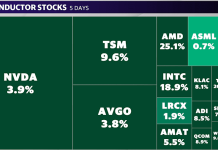
Perhaps nowhere is trade policy impact more evident than in the technology sector, where companies are fundamentally restructuring their operations, supply chains, and market strategies. Semiconductor manufacturers have collectively announced over $180 billion in domestic production investments, directly responding to trade policies that incentivize reshoring of critical technology infrastructure. These capital expenditure commitments have driven semiconductor equipment stocks up 28% this quarter alone.
The ripple effects extend beyond hardware into software and services. Cloud computing companies are establishing new data centers in strategic locations to comply with emerging data sovereignty requirements embedded in recent trade agreements. This geographic diversification of digital infrastructure represents a multi-billion dollar reallocation of technology capital, with significant implications for real estate investment trusts, construction companies, and regional economic development.
Supply chain finance has emerged as an unexpected beneficiary of the trade policy impact. As companies diversify their supplier networks and establish new international partnerships, demand for trade financing solutions has surged 45% compared to last year. Financial institutions specializing in letters of credit, export financing, and currency hedging instruments are reporting their strongest quarterly results in over a decade.
Energy Market Realignment
Energy markets are undergoing their own transformation as trade policy impact reshapes global energy flows. Recent agreements have opened new pathways for liquefied natural gas exports, driving energy infrastructure stocks higher while simultaneously affecting regional pricing dynamics. The West Texas Intermediate crude oil benchmark now trades with a much tighter correlation to trade policy announcements than to traditional supply indicators like OPEC production decisions.
Renewable energy investments are experiencing particular volatility as trade policies affecting solar panel imports and wind turbine components create uncertainty around project economics. However, this same uncertainty is driving increased domestic renewable energy manufacturing investment, with several major announcements in the past quarter totaling over $25 billion in new production capacity.
Bond markets are exhibiting sophisticated responses to trade policy developments, with yield curve movements increasingly reflecting investor expectations about how trade relationships will affect long-term economic growth and inflation dynamics. Treasury yields often move inversely to trade policy uncertainty, as investors seek safe haven assets during periods of elevated trade negotiation activity.
The cumulative trade policy impact on US financial markets represents more than temporary volatility – it signals a fundamental restructuring of how capital flows, business investment, and risk assessment operate in an increasingly complex global economy. As trade relationships continue evolving, financial markets are likely to remain sensitive to policy developments, creating both challenges and opportunities for investors who can successfully navigate this new paradigm. The markets that emerge from this period of adjustment will likely be more domestically resilient yet globally interconnected than ever before, reflecting the nuanced balance that modern trade policy seeks to achieve.