

















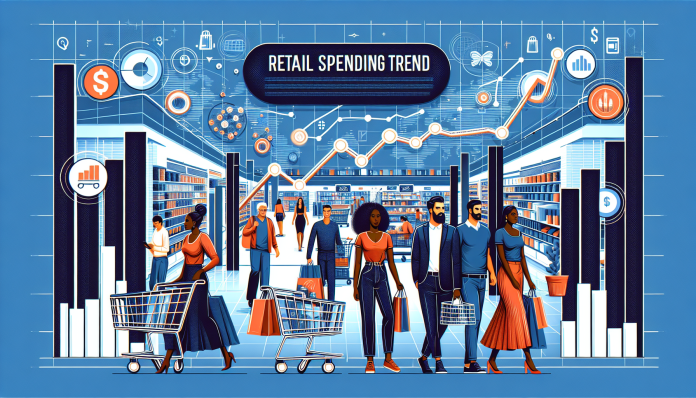
Consumer wallets are opening wider than economists predicted, as the latest retail spending trend data reveals a remarkable surge that’s rewriting economic forecasts. Despite lingering concerns about inflation and market volatility, Americans are demonstrating unprecedented shopping confidence, driving retail sales to levels that haven’t been seen in years.
The numbers paint a compelling picture of consumer resilience. March retail sales jumped 2.8% month-over-month, significantly outpacing the modest 1.2% growth analysts had projected. This robust performance extends a retail spending trend that has surprised markets for three consecutive quarters, with particular strength in discretionary categories that typically suffer during economic uncertainty.
What makes this retail spending trend particularly noteworthy is its breadth across demographic groups and geographic regions. Unlike previous surges concentrated in high-income brackets, current data shows spending increases across middle and lower-income segments, suggesting genuine economic momentum rather than isolated wealth effects. Electronics retailers reported a 15% increase in sales, while clothing and accessory stores saw gains of 12%, indicating consumers are moving beyond essential purchases.
The driving forces behind this retail spending trend are multifaceted. Wage growth has accelerated to 4.2% year-over-year, outpacing inflation for the first time in eighteen months. Additionally, household savings accumulated during previous economic disruptions are finally being deployed, creating a spending multiplier effect that’s boosting retail performance across categories.
Technology adoption continues reshaping the retail landscape, with e-commerce platforms capturing 18.5% of total retail sales. Mobile commerce alone grew 28% compared to the same period last year, as consumers increasingly embrace seamless digital shopping experiences. This shift has enabled retailers to optimize inventory management and respond more quickly to changing consumer preferences, further amplifying the positive retail spending trend.
Regional Variations and Sector Performance
Geographic analysis reveals interesting patterns within the broader retail spending trend. Western states lead with 3.4% monthly growth, driven by robust employment markets and housing wealth effects. Southern regions follow closely at 3.1%, while Midwest and Northeast areas show more modest but steady gains around 2.2%. These regional differences reflect varying economic conditions but collectively contribute to national retail strength.
Sector-specific performance shows clear winners emerging from this retail spending trend. Home improvement retailers continue their exceptional run with 8% growth, as consumers invest in property upgrades. Restaurant and food service establishments are experiencing a renaissance, posting 6% increases as dining habits normalize and social spending rebounds.
Luxury retailers are experiencing particularly strong momentum, with sales rising 11% as affluent consumers demonstrate confidence in economic stability. This premium segment growth often serves as a leading indicator for broader economic health, suggesting the current retail spending trend has substantial staying power.
Economic Implications and Future Outlook
The sustained strength of this retail spending trend is prompting economists to revise GDP growth projections upward. Consumer spending accounts for roughly 70% of economic activity, making retail performance a critical barometer for overall economic health. Current momentum suggests the economy may be entering a more robust growth phase than previously anticipated.
However, this retail spending trend also presents potential challenges. Increased demand is putting upward pressure on prices in certain categories, particularly services and imported goods. Retailers are carefully managing inventory levels and supply chain relationships to capitalize on demand while controlling costs.
The persistence and breadth of the current retail spending trend signals more than a temporary uptick in consumer activity. With employment remaining strong, wages rising, and consumer confidence solidifying, this pattern appears positioned to continue driving economic growth. For investors, policymakers, and business leaders, understanding and adapting to this evolving retail landscape will be crucial for navigating the opportunities ahead.