
















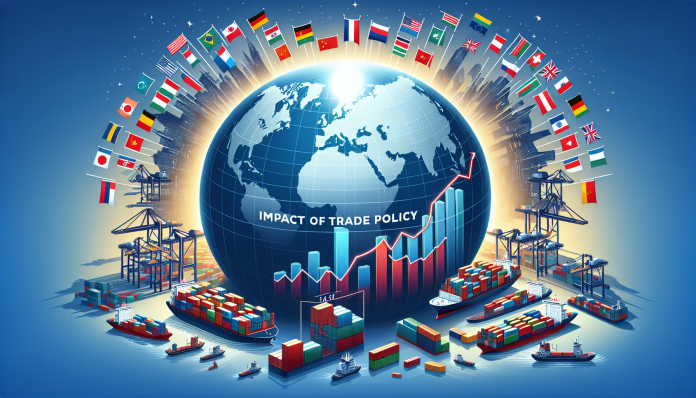
American financial markets are experiencing a seismic shift as evolving trade relationships between major economies reshape investment strategies and market dynamics. From technology stocks weathering supply chain disruptions to agricultural commodities riding waves of export demand, the intricate web of international commerce continues to drive unprecedented volatility and opportunity across Wall Street.
The interconnected nature of global markets means that policy decisions made in Washington, Beijing, Brussels, or any major economic center can trigger cascading effects that ripple through equity markets, bond yields, and currency valuations within hours. Understanding these complex relationships has become essential for investors navigating an increasingly unpredictable financial landscape.
Manufacturing and Technology Sectors Lead Market Transformation
The trade policy impact on American manufacturing and technology companies has been particularly pronounced, with semiconductor firms experiencing dramatic valuation swings based on export restrictions and supply chain modifications. Companies like Intel, AMD, and Nvidia have seen their stock prices fluctuate by double-digit percentages following announcements of new trade agreements or tensions with key trading partners.
Manufacturing giants have responded by reshoring production facilities, creating a boom in domestic industrial real estate investment trusts and construction-related equities. This shift has generated approximately $180 billion in announced manufacturing investments over the past two years, according to recent Commerce Department data. The ripple effects extend beyond individual companies to entire supply chains, with logistics providers, raw material suppliers, and industrial equipment manufacturers all experiencing significant business model adaptations.
Technology companies are increasingly diversifying their supply chains across multiple countries, a strategy that has created new investment opportunities in emerging markets while reducing dependence on single-source suppliers. This geographic diversification has led to increased capital expenditures and temporary margin compression for many firms, but analysts project stronger long-term competitive positioning.
Currency Markets Reflect Global Trade Realignment
Exchange rate volatility has reached levels not seen since the financial crisis, with the trade policy impact creating sustained periods of dollar strength and weakness depending on the perceived direction of international agreements. The dollar index has experienced intraday swings exceeding 2% on multiple occasions following major trade announcements, creating both opportunities and risks for multinational corporations and currency traders.
Export-heavy industries have particularly benefited from strategic dollar weakness, with agricultural commodities experiencing renewed international demand. Corn, soybean, and wheat futures have shown correlation coefficients above 0.7 with trade policy announcements, demonstrating the direct connection between diplomatic developments and commodity pricing.
Import-dependent sectors face ongoing challenges from currency fluctuations, forcing retailers and consumer goods companies to implement sophisticated hedging strategies. Companies like Walmart, Target, and Home Depot have invested heavily in financial instruments designed to minimize currency exposure, with some allocating over 15% of their cash flows to hedging activities.
Emerging Market Integration Creates New Investment Channels
The trade policy impact has accelerated American investment in alternative markets as companies and fund managers seek to diversify geographical exposure. Latin American markets have experienced record foreign direct investment, with U.S. companies establishing manufacturing and sourcing operations in Mexico, Colombia, and Brazil.
This geographic pivot has created substantial opportunities for emerging market-focused exchange-traded funds and mutual funds. Assets under management for Latin America-focused funds have grown by over 40% in the past 18 months, while Southeast Asian investment vehicles have seen similar inflows as companies establish alternative supply chains.
Private equity firms have capitalized on this trend by launching specialized funds targeting infrastructure development in emerging markets, recognizing that successful trade diversification requires substantial improvements in transportation, logistics, and telecommunications capabilities across developing nations.
Bond Markets Adapt to Shifting Economic Fundamentals
Fixed-income markets have experienced significant structural changes as the trade policy impact alters inflation expectations and economic growth projections. Treasury yields have shown increased sensitivity to trade announcements, with the 10-year note experiencing volatility spikes of 15-20 basis points following major policy revelations.
Corporate bond markets reflect the sectoral winners and losers from trade policy changes, with manufacturing and commodity companies enjoying tighter credit spreads while import-dependent retailers face increased borrowing costs. High-yield bond indices have diverged significantly based on industry exposure, creating opportunities for active management strategies.
International bond markets have gained prominence as investors seek to capture currency appreciation and yield opportunities in countries benefiting from trade diversification. Emerging market debt has attracted substantial inflows, though investors remain cautious about political stability and regulatory changes in developing economies.
The financial markets’ response to evolving trade relationships demonstrates the profound interconnectedness of global commerce and capital flows. As policymakers continue to negotiate complex international agreements, investors must remain adaptable and informed about the multifaceted ways that trade policy decisions influence market dynamics. Success in this environment requires not only understanding immediate policy implications but also anticipating the long-term structural changes that will define the next generation of global economic relationships.