



















The intricate relationship between international trade policies and financial markets has never been more pronounced than it is today. As global economic relationships evolve and new trade agreements reshape commercial flows, the trade policy impact on US financial markets continues to create both opportunities and challenges for investors across all sectors.
From manufacturing stocks experiencing dramatic swings based on tariff announcements to currency markets reacting instantly to trade negotiation updates, the fingerprints of trade policy are visible throughout the American financial landscape. This transformation goes far beyond simple import-export calculations, fundamentally altering how capital flows, how sectors perform relative to each other, and how investors assess risk in an increasingly interconnected global economy.
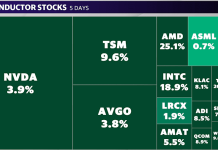
The most immediate manifestation of trade policy impact appears in sector rotation patterns that have become increasingly predictable yet volatile. Technology companies, particularly those with significant supply chain exposure to Asia, now see their stock prices move in direct correlation with trade policy announcements. When new semiconductor agreements are reached or restrictions are modified, the corresponding market movements can be measured in billions of dollars within hours.
Manufacturing indices have similarly become barometers for trade policy effectiveness. Companies that previously focused solely on operational efficiency now dedicate substantial resources to monitoring policy developments, with many restructuring their supply chains preemptively. This shift has created new investment themes, with nearshoring and supply chain diversification becoming major drivers of capital allocation decisions.
Agricultural commodities present another fascinating case study in trade policy impact dynamics. Soybean futures, corn prices, and wheat markets now fluctuate based on diplomatic developments that might have seemed unrelated to farming just a decade ago. Export-dependent agricultural regions have seen their economic fortunes tied directly to trade negotiations, creating regional economic disparities that ripple through local banking sectors and real estate markets.
Currency Markets Reflect Policy Uncertainty
Perhaps nowhere is the trade policy impact more immediately visible than in foreign exchange markets. The dollar’s strength or weakness often correlates directly with trade policy announcements, creating feedback loops that affect everything from import costs to tourism revenues. When trade tensions escalate, safe-haven demand typically strengthens the dollar, which paradoxically can make American exports less competitive, potentially undermining the very trade objectives that sparked the initial policy changes.
This currency volatility has forced multinational corporations to become more sophisticated in their hedging strategies. Companies that once viewed foreign exchange risk as a secondary concern now employ teams of specialists dedicated to navigating currency fluctuations driven by trade policy developments. The cost of this hedging has become a significant factor in earnings calculations, particularly for companies with substantial international exposure.
Interest rate expectations have also become intertwined with trade policy outcomes. Federal Reserve decisions increasingly factor in trade-related economic impacts, creating a complex web where monetary policy and trade policy influence each other. Bond markets now price in trade policy risks alongside traditional inflation and growth concerns, leading to new patterns in yield curve behavior that challenge conventional fixed-income investment strategies.
The venture capital and private equity landscape has adapted remarkably to these trade policy realities. Investment firms now conduct detailed trade policy risk assessments before committing capital, particularly in sectors vulnerable to international trade disruptions. This has led to increased investment in domestic manufacturing capabilities and technologies that reduce dependence on potentially unstable trade relationships.
Long-term Structural Changes
Beyond immediate market reactions, the sustained trade policy impact is creating structural changes in how American businesses operate and compete. Supply chain resilience has become as important as cost efficiency, leading to fundamental shifts in corporate strategy that extend far beyond trade considerations. These changes are reshaping entire industries and creating new investment opportunities in areas like logistics technology, warehouse automation, and alternative manufacturing processes.
The financial services sector itself has evolved to address trade policy complexity. New financial products designed to hedge trade policy risks have emerged, while traditional trade finance has become more sophisticated and technology-driven. Banks are developing specialized expertise in trade policy analysis, recognizing that their commercial lending decisions must account for rapidly changing international trade dynamics.
Real estate markets in key trading regions have also felt the trade policy impact significantly. Port cities and border communities experience economic volatility directly tied to trade volumes, while inland manufacturing centers see property values fluctuate based on reshoring trends driven by trade policy considerations.
As trade policies continue evolving in response to global economic shifts, technological advances, and geopolitical developments, US financial markets are adapting to a new reality where international trade considerations permeate virtually every investment decision. The trade policy impact has transformed from an occasional market-moving event to a constant underlying factor that shapes market behavior, creating both new risks to manage and new opportunities to capture for those who understand these complex dynamics.