













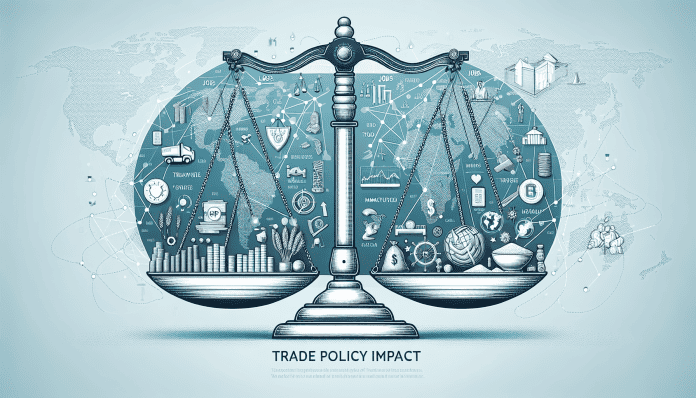
The global economic landscape continues to shift dramatically as nations recalibrate their trade relationships, creating ripple effects that touch every corner of the financial world. From manufacturing hubs in Asia to technology corridors in North America, the trade policy impact on markets, currencies, and investment strategies has become impossible to ignore. Understanding these complex dynamics isn’t just academic—it’s essential for anyone making financial decisions in today’s interconnected economy.
How Trade Policy Changes Drive Market Volatility
Financial markets respond swiftly to trade policy announcements, often before the actual economic effects materialize. When major economies adjust tariff structures or renegotiate trade agreements, equity markets can swing by percentage points within hours. The trade policy impact on sector-specific stocks proves particularly pronounced, with manufacturing, technology, and agricultural companies experiencing the most dramatic price movements. Currency markets also react aggressively, as trade policies directly influence import-export balances and capital flows between nations.
Recent analysis shows that uncertainty around trade negotiations can increase market volatility by up to 30%, even when actual policy changes remain minimal. This phenomenon occurs because investors price in potential scenarios long before final decisions emerge, creating opportunities for those who understand the underlying mechanics.
Supply Chain Disruptions and Business Adaptation Strategies
Modern supply chains span continents, making them particularly vulnerable to trade policy shifts. Companies have learned that diversification isn’t optional—it’s survival. The strategic reshoring and nearshoring trends we’re witnessing represent direct responses to trade policy uncertainty, fundamentally altering cost structures across industries.
Manufacturers are investing billions in alternative production facilities, while retailers are restructuring their sourcing networks to maintain profit margins despite changing tariff landscapes. This massive capital reallocation creates investment opportunities in infrastructure, logistics technology, and emerging manufacturing hubs, while potentially diminishing returns in previously dominant production centers.
Currency Markets and Exchange Rate Implications
Trade policies wield enormous influence over currency valuations, creating both risks and opportunities for international investors. When countries impose significant tariffs or trade restrictions, their currencies often strengthen initially due to reduced import demand, but longer-term effects depend on retaliatory measures and economic efficiency losses.
The trade policy impact on exchange rates extends beyond bilateral relationships, affecting global reserve currency dynamics and emerging market stability. Investors monitoring these patterns can position themselves advantageously in forex markets, commodity investments, and international equity allocations. Smart money recognizes that currency movements driven by trade policy often create temporary inefficiencies that skilled investors can exploit.
Sector-Specific Investment Opportunities and Risks
Different industries experience vastly different outcomes from trade policy changes. Technology companies face unique challenges when policies target intellectual property transfers or semiconductor supply chains, while agricultural exporters might benefit from trade agreements that reduce barriers to food exports.
Energy sector investments also fluctuate significantly based on trade policies affecting renewable technology imports, oil pipeline approvals, and natural gas export licenses. Mining and commodities companies find their valuations closely tied to trade relationships between major consuming and producing nations. Understanding these sector-specific dynamics allows investors to construct portfolios that benefit from policy trends rather than suffer from them.
Regional Economic Development and Emerging Market Dynamics
Trade policy shifts often accelerate regional economic development patterns, creating new growth centers while potentially disadvantaging established ones. Countries positioned as alternative manufacturing bases or commodity suppliers can experience rapid economic expansion when trade routes shift due to policy changes.
Emerging markets particularly benefit from trade diversification trends, as companies seek alternatives to traditional suppliers and manufacturing locations. This creates opportunities in infrastructure development, financial services expansion, and consumer market growth in previously overlooked regions. The ripple effects extend to real estate, local banking systems, and domestic consumption patterns.
Strategic Portfolio Positioning for Policy-Driven Changes
Successfully navigating the trade policy impact on investment returns requires proactive portfolio management rather than reactive adjustments. Diversification across geographic regions, currency exposures, and industry sectors provides some protection, but active positioning based on policy trends can generate superior returns.
Consider allocating portions of investment portfolios to companies and sectors likely to benefit from ongoing trade policy evolution. This might include logistics technology firms, alternative manufacturing locations, or companies with highly diversified supply chains. Currency hedging strategies also become crucial for international investors seeking to manage policy-driven exchange rate volatility.
The interconnected nature of global trade means that policy changes in one region inevitably affect investment opportunities worldwide. Rather than viewing trade policy uncertainty as purely negative, informed investors can position themselves to capitalize on the structural changes reshaping the global economy. Stay informed about emerging trade negotiations, monitor sector-specific policy developments, and consider how these trends might create both risks and opportunities in your investment strategy.